
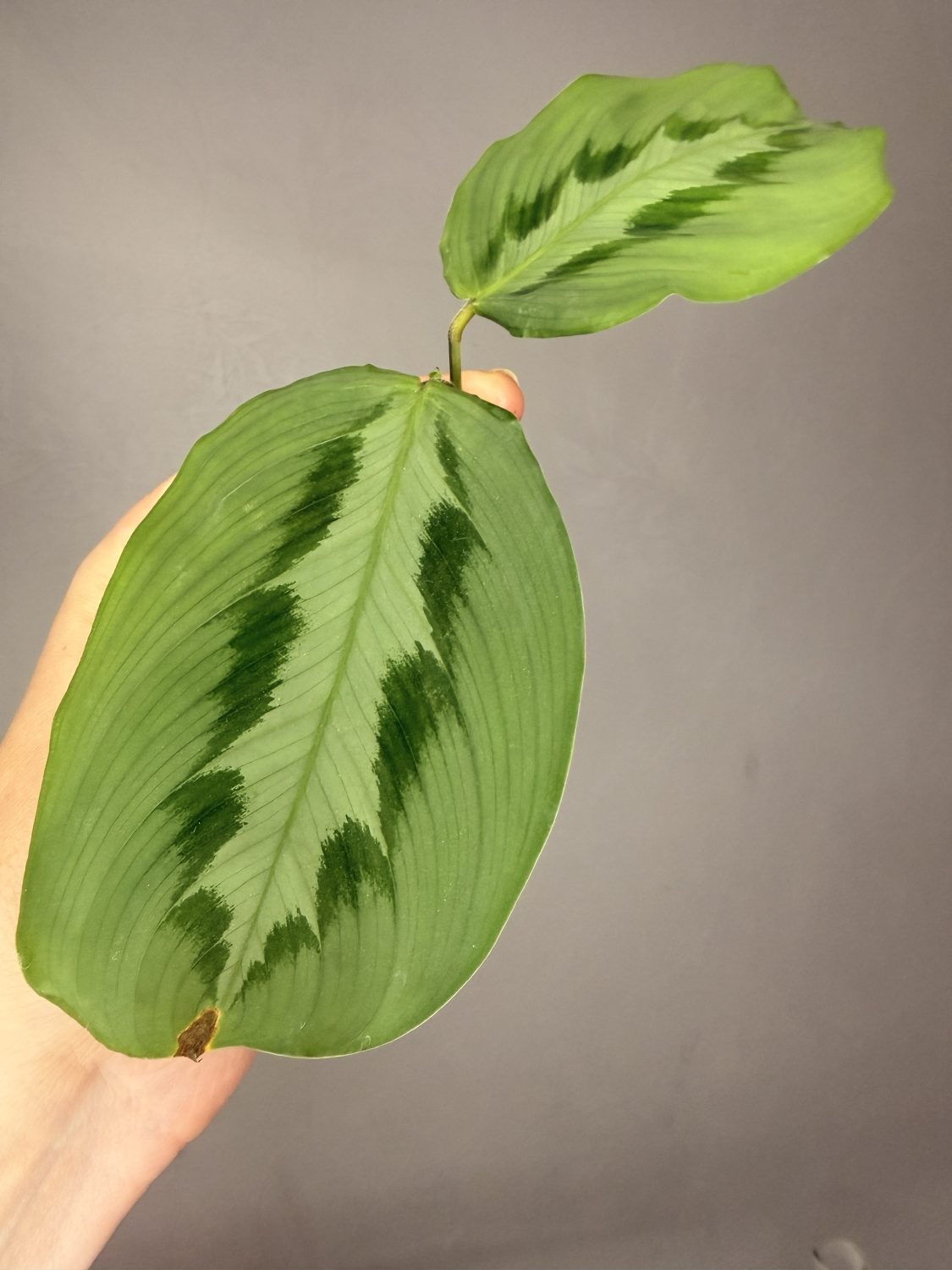
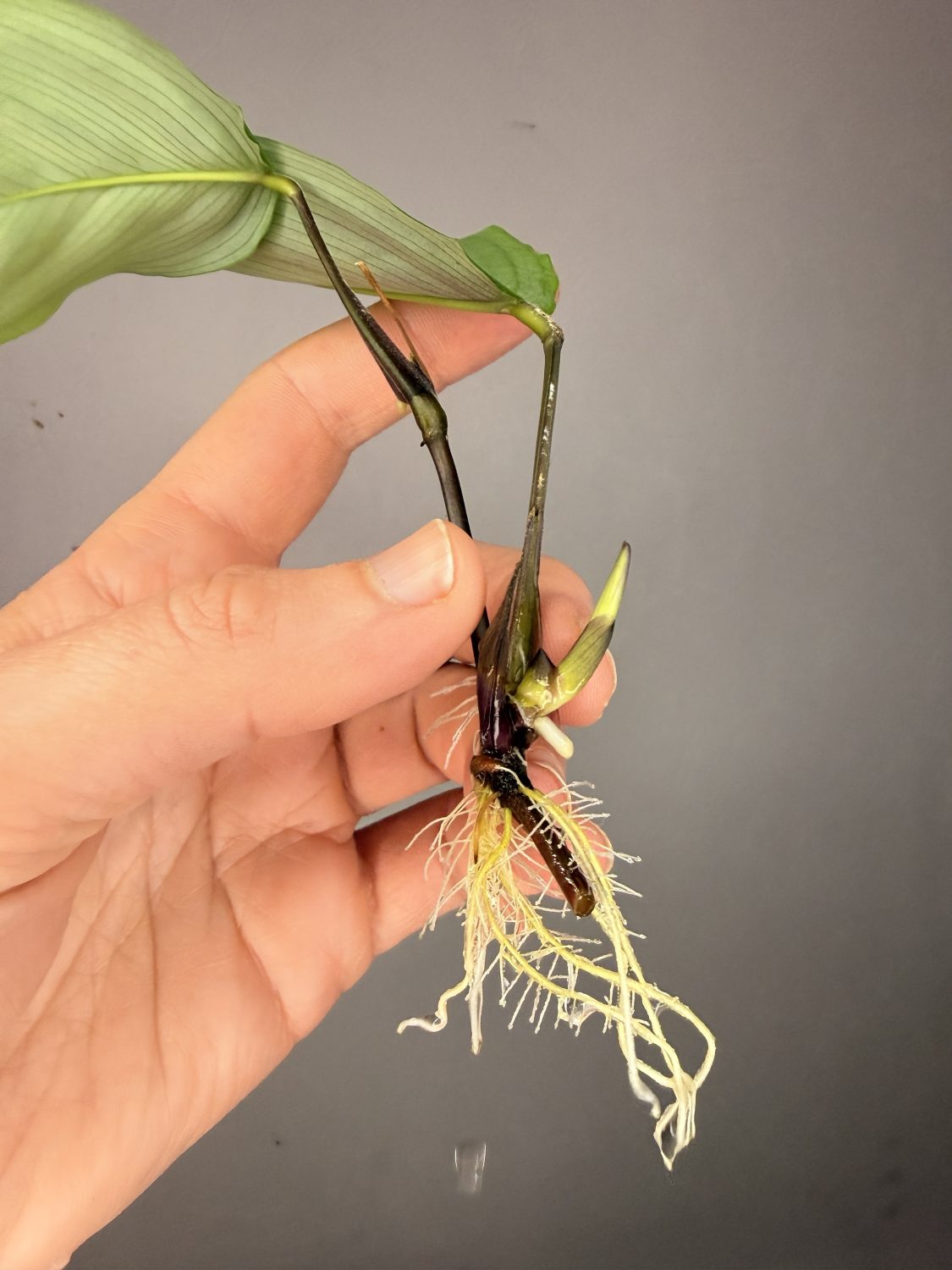
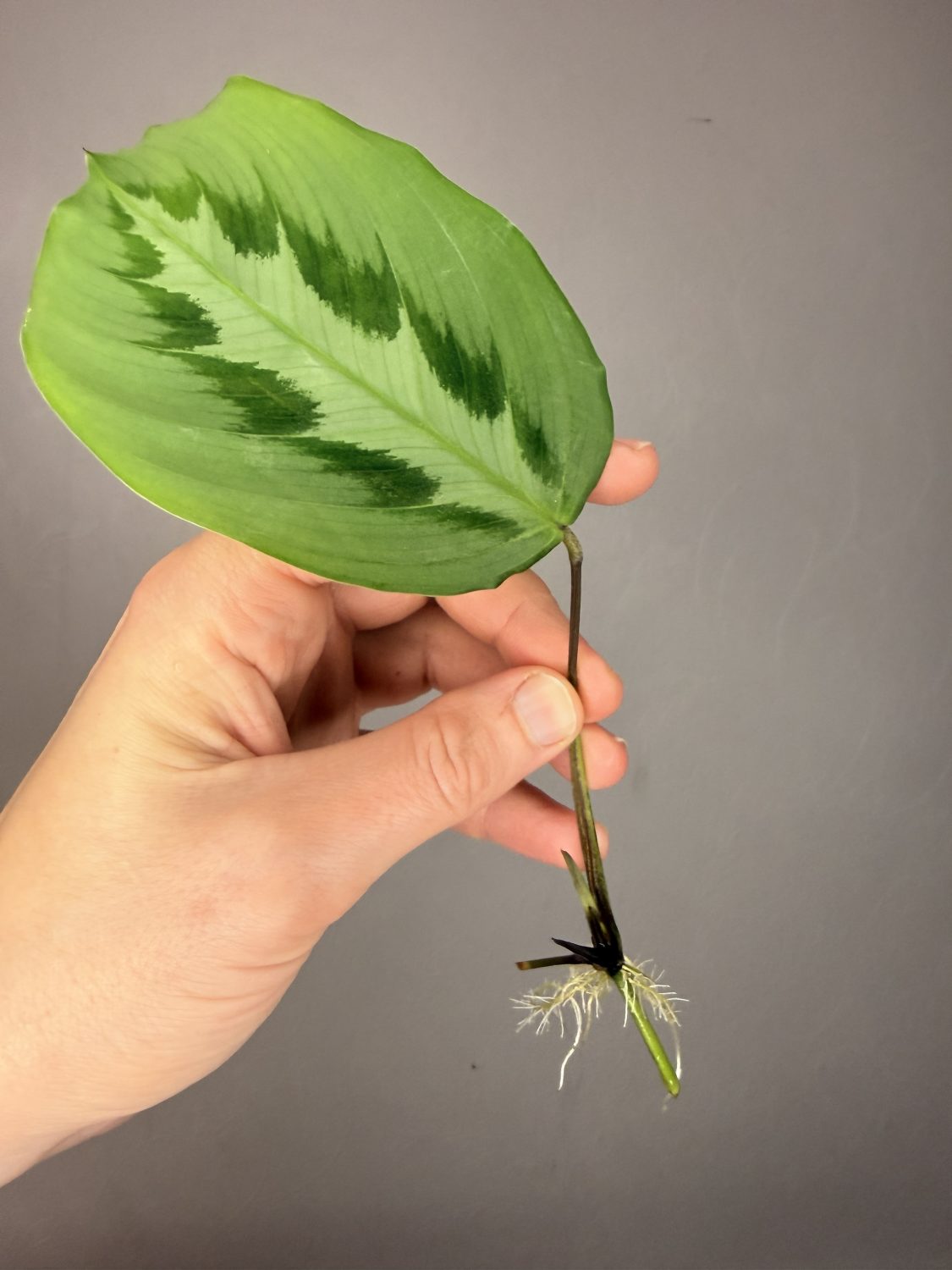
Maranta cristata cultivars are rare in European and global plant markets.
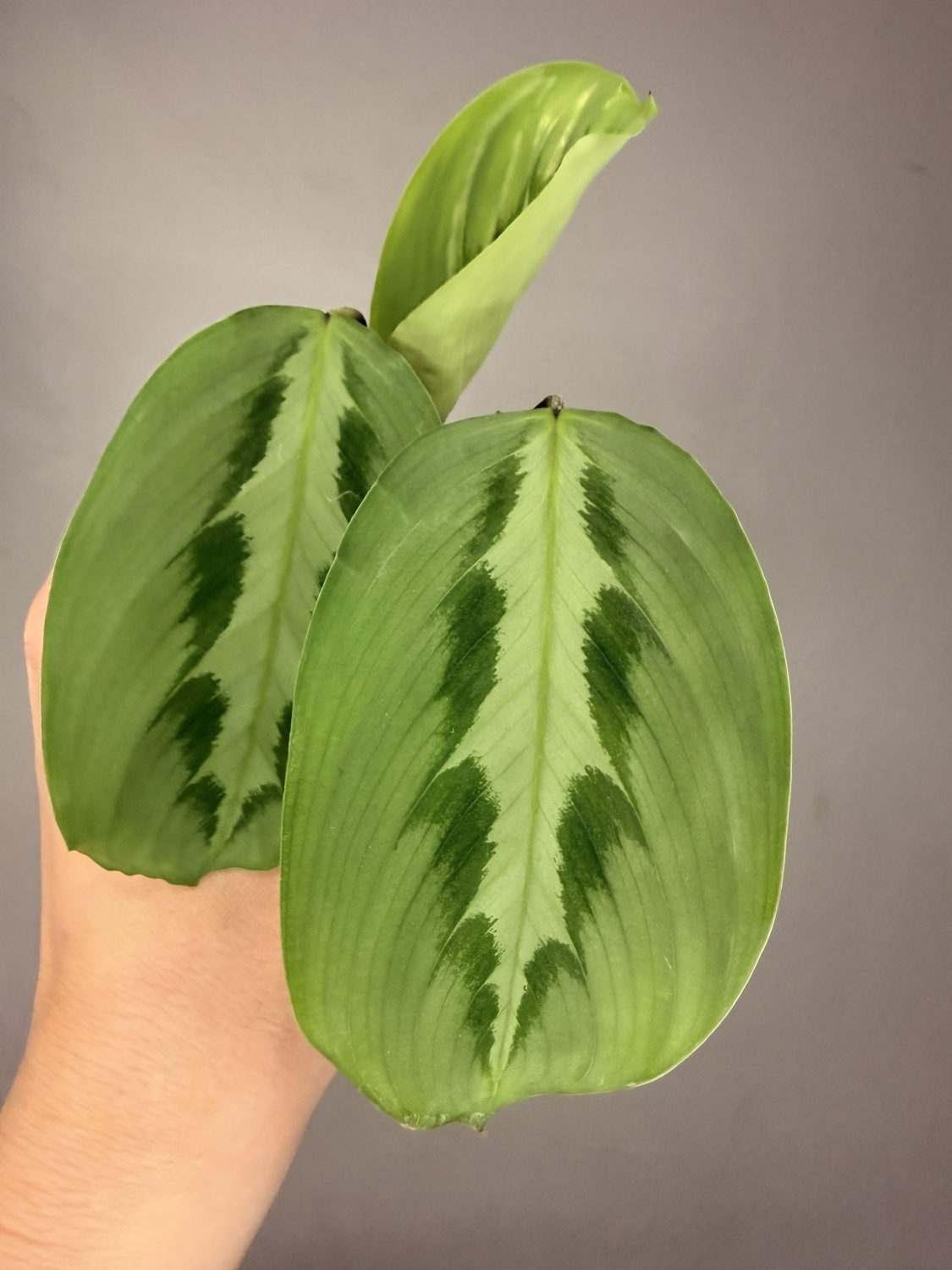
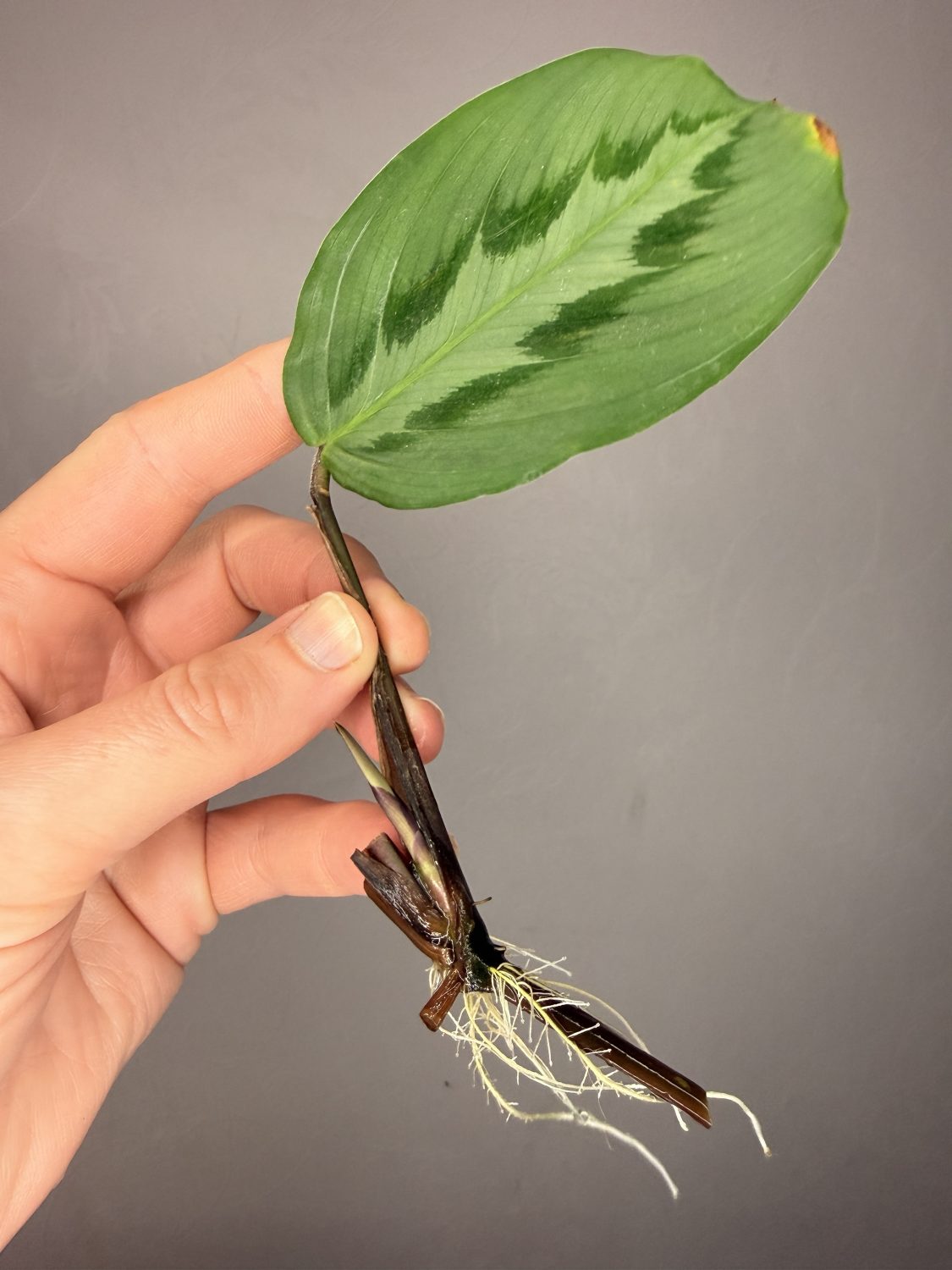
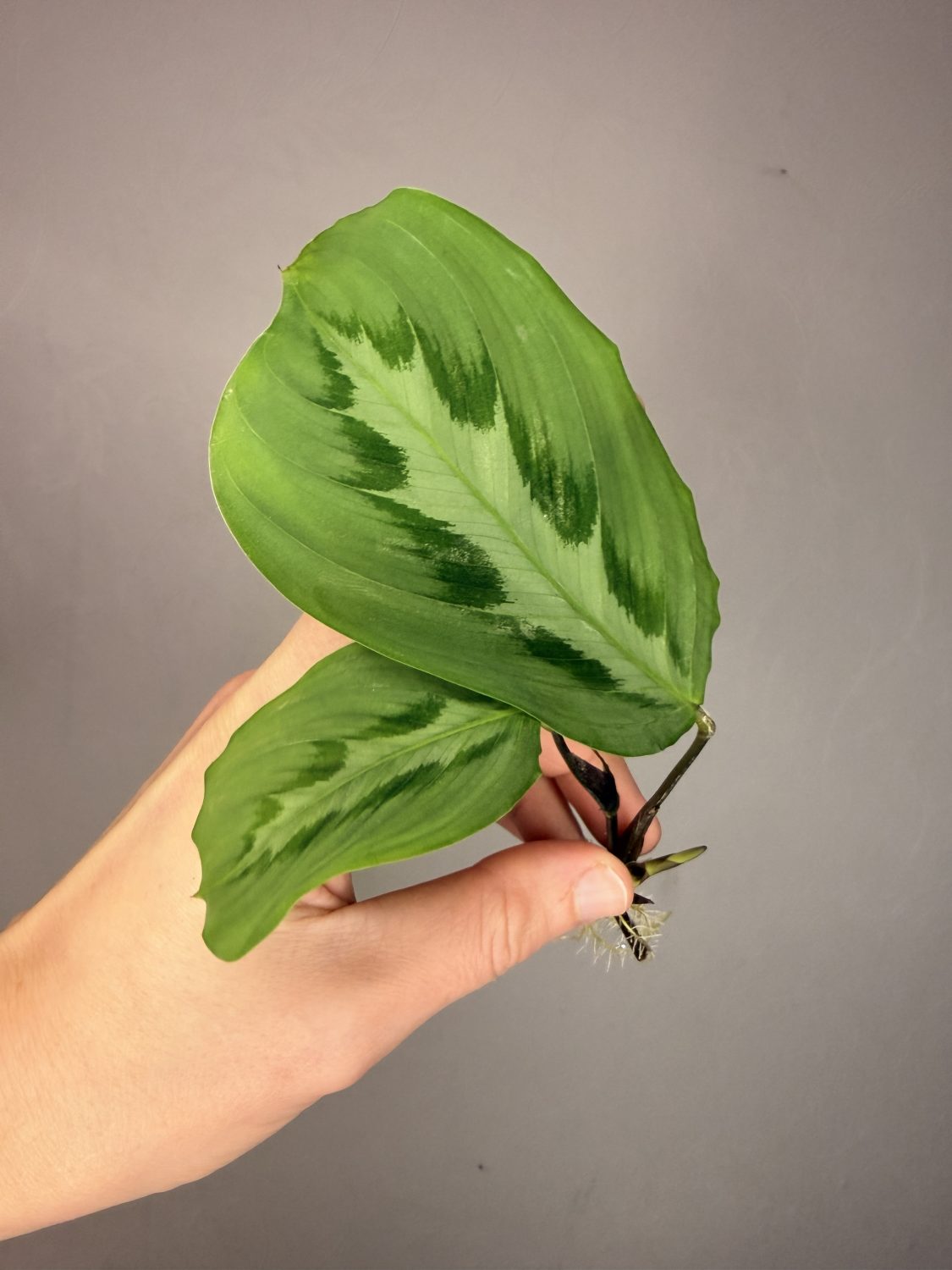
The first image serves as a cover illustration and is not included in the sale. Please refer to the following photos to see the actual product being offered.
Leaf color and shape in Marantas may vary depending on the size of the rhizome from which the new shoot has grown. Sometimes they can differ significantly and look completely different.
Light: Marantas prefer a bright spot (but not direct sunlight). They will also feel very comfortable on a north-facing windowsill.
Watering:Allow the top layer of the soil to dry slightly. If the plant dries out too much, a Maranta will signal it by rolling its leaves into tight tubes. If overwatered, the leaves will turn yellow. It is recommended to water with room-temperature, settled tap water or filtered water.
Humidity: Marantas are ideal for bathrooms, where the air humidity is higher, because in dry indoor air the leaf tips will start to brown. Avoid placing the plant near radiators or in cold areas. The optimal humidity level is 40–60%.
Marantas can and should be misted, and once a week it is recommended to give the plant a gentle shower, thoroughly rinsing both the upper and lower sides of the leaves. If rainwater is available, it will feel like a true SPA treatment for a Maranta.
Repot the plant when roots begin to grow out through the bottom drainage holes. Choose a pot 2–3 sizes larger than the current one. Plant in an airy substrate based on peat or coconut fiber, adding perlite for extra lightness.
Fertilizing: Do not overdo fertilizing, as Marantas do not like soil rich in minerals. Fertilize from March to October, no more than once a month, using fertilizer intended for green houseplants—preferably at a lower concentration than indicated on the package.
Marantas bloom with delicate lilac-white flowers. However, Marantas are usually grown not for their flowers, but for their decorative foliage.
A very interesting feature of almost all Maranta varieties—except Maranta Arundinacea variegata —is that during daylight hours the leaves are lowered, but at night they raise upwards. For this reason, they are called “prayer plants.”
Propagation: New shoots in the pot form from mature rhizomes. Most Marantas are also easy to propagate from top cuttings.
Marantas are pet-friendly houseplants that do not contain toxic substances, making them an ideal choice if you have a dog or cat that occasionally likes to nibble on leaves. :)

 English
 Latvian